Researchers at the University of Colorado Boulder discovered that emissions from volcanoes around the globe can mask or reduce the effects of global warming.
A team of graduate students from Concordia University have developed a new tool that rates the level of compliance between environmental impact and the urban planning goals of development projects, which will also help increase the potential for long-term sustainability.
The National Academy of Sciences has turned 150 and will celebrate with several activities throughout the year.
USDA scientists and cooperators developed an interactive atlas of wireless plants in Guatemala that are closely related to crop plants, which will make it easier to preserve plants with genes that are vital to global food security.
The European Union (EU) awarded the international Mare Nostrum consortium more than $4 million to find new ways of preserving the Mediterranean Sea and its coastline.
Gardner-Fields, Inc. of Tacoma, Washington and IBC Manufacturing Co. of Memphis, Tennessee will be paying fines for violating federal pesticide laws, according to separate settlements announced by the EPA.
Researchers have discovered a new process that enables natural resource managers to better conserve particular wildlife, plants, and ecosystems as the climate continues to change.
The new product suite by Aconex extends online collaboration to full project lifecycle.
WaterNow, a new system launched by the USGS allows anyone to find out the current conditions of thousands of rivers and streams across the country, right from their phones.
According to a newly released international study, it was shown that climate change and the environment is not high on the priority list for people in the U.S. and around the globe.
The net economic benefit of the U.S. Department of Energy’s National Renewable Energy Laboratory (NREL) to Colorado’s economy was $814.8 million in fiscal year 2012, according to a study by the University of Colorado’s Leeds School of Business.
The U.S. Chemical Production Regional Index (U.S. CPRI) rose by 0.9 percent in December and 0.7 percent in January, with production rising in all major producing regions for the second month in a row, according to the American Chemistry Council (ACC).
According to the report by the International Energy Agency (IEA), the estimate of 2013 global oil demand has been slightly lowered, following the International Monetary Fund’s (IMF) forecast.
The EPA has announced the nominations for the 2013 Presidential Green Chemistry Challenge Awards for companies and institutions that can design chemicals or a new product that help protect public health and the environment.
According to a new study in the Journal of Phycology, ocean nitrogen caused by pollution and natural sources sparks the growth of toxic phytoplankton species, which is very harmful to marine life and human health.
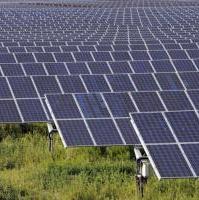
U.S. Energy Secretary Dr. Steven Chu cited progress on solar, wind, and EV battery initiatives in a Feb. 1 letter saying he’ll soon return to California and to academia.
- By Jerry Laws
- February 12, 2013
NREL scientists and other researchers demonstrated a process where quantum dots can self-assemble at optimal locations in nanowires, a breakthrough that could vastly improve solar cells, lighting devices, and quantum computing.
The USGS has announced that nonfuel mineral production values in the U.S. have increased for the third consecutive year, noting a $1.7 billion raise since 2011.
Scientists from the South Dakota University made history this year by retrieving additional ice from the main borehole as part of the West Antarctica Ice Sheet Divide Ice Core project.
The ARS is conducting a new study to discover how microbes in the soil that are carried off by strong winds could lead to finding ways to minimize soil damage that is caused by wind erosion.