The web-based tool that helps identify details on wastewater discharges is now available in a beta version.
EPA is beginning to develop requirements for the permit covering incidental discharges from vessels.
Flammable and bubbling drinking water was coming out of taps at two residences near Fort Worth, Texas; EPA testing found methane and benzene.
The U.S. Overseas Private Investment Corporation will provide at least $300 million in financing for new private equity investment funds that could ultimately invest more than $1 billion in renewable resources projects in emerging markets.
The Electric Power Research Institute compared the energy use of frozen food cooking in microwaves, toaster ovens, and conventional ovens.
According to a Mexico government and Pew Center survey of more than 500 COP16 attendees, action against climate change requires the support of the public, whose members may not even understand the problem.
United Science, a Minnesota startup company, has licensed sensor technology developed at the University of Minnesota that could limit the amount of toxic byproducts from mining and other industries that end up in the environment and improve productivity at the same time.

The experts answer why the topic is so hot now and the best way you can protect your clients and yourself from liability.
- By Dianne P. Crocker
- December 06, 2010
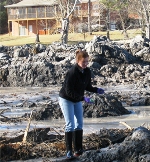
Current water quality monitoring looks only at the surface, according to Avner Vengosh, Duke professor of geochemistry and water quality.
Preliminary emissions testing of a small-scale waste-oil power generator have found that the system generates low emissions.

Many coastal wetlands worldwide — including several on the U.S. Atlantic coast — may be more sensitive than previously thought to sea-level rise projections for the 21st century, according to the U.S. Geological Survey.
One new final toxicological profile for chlorine and six updated ones of priority hazardous substances are in this new set.
Passage of the Diesel Emissions Reduction Act is being supported by more than 500 environmental, health, industry and government organizations, according to the Diesel Technology Forum.
North Carolina's LID certification program, which will be discussed in the webcast, may be replicated nationally.
MiaSolé, which manufactures copper indium gallium selenide (CIGS) thin-film photovoltaic solar panels, announced that the U.S. Department of Energy's National Renewable Energy Laboratory (NREL) independently confirmed the 15.7 percent efficiency of its large-area production modules, which are one square meter in size.