The past decade has seen 77,951 fires burn about 6.7 million acres in the United States. One condition that facilitates the spread of wildfires is invasive plant species. Nonnative weeds can modify the vegetation of a landscape and provide a source of fuel that did not previously exist.
Today’s wireless-sensor networks can do everything from supervising factory machinery to tracking environmental pollution to measuring the movement of buildings and bridges.
GE's latest energy innovation, the FlexAero LM6000-PH, enables growth and development everywhere with fast, flexible, natural gas-driven power generation.
From funding smart meters on college campuses, to reducing hazardous chemicals in high school laboratories, to promoting alternatives to dry cleaning, the U.S. Environmental Protection Agency (EPA) is making its pollution prevention grants count across New Jersey and New York. The EPA has awarded more than $600,000 in grants to fund projects that help prevent pollution in these two states.
The Department of Transportation is proposing to explicitly ban the use of electronic cigarettes on aircraft.
A team of students from Embry-Riddle Aeronautical University demonstrated a first in aviation history.
The list highlights vulnerable elements where global production is concentrated in a small number of countries, including metals that are critical to development of a low-carbon digital economy. The list helps to focus future research on diversifying supply from new resources, using greener production technologies and cost-effective recycling.
Scientists have long debated about the impact on global climate of water evaporated from vegetation. New research from Carnegie's Global Ecology department concludes that evaporated water helps cool the earth as a whole, not just the local area of evaporation, demonstrating that evaporation of water from trees and lakes could have a cooling effect on the entire atmosphere.
The project is slated to be the first plant in the United States to produce GTL transportation fuels and other products.
Alternative fuel sources for cars may have a glowing future as a Kansas State University (K-State) graduate student is working to replace petroleum fuels with ones made from sunlight.
California beach towns could face hefty economic losses caused by sea level rise in the next century, according to a new state-commissioned study.
The Empire State Building has been awarded LEED® Gold for Existing Buildings certification as further recognition from the $550 million Empire State ReBuilding program.
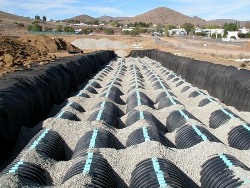
Engineers create a detention system that follows city mandate to keep stormwater discharge to pre-development levels.
- By Gina Carolan
- September 14, 2011
They expressed concerns ranging from safety, such as unpredictable weather patterns and dangerous ice conditions, to changes in plants and animals as well as decreased availability of firewood.

Stanford researchers have gotten a glimpse into an uncertain future where increasing levels of carbon dioxide in the Earth's atmosphere will lead to higher levels in the ocean as well, leaving the water more acidic and altering underwater ecosystems.