eRecyclingCorps reached the milestone last month, less than five years after the organization was founded.
To help minimize the amount of e-waste caused by electronics firms, TFI has developed a new training program that teaches electronics industry personnel how to reduce environmental impacts.
In order to make manufacturing a sustainable process, companies must green their supply chains by sustainably sourcing materials, reducing the carbon footprint of factories and transportation, and properly disposing of old products.
- By Lisa Cairns
- January 29, 2013
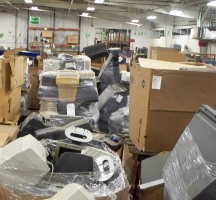
Do your own, personal part in making proper decisions about recycling e-waste. Don't be afraid to call someone out or voice your opinion about how important our planet is and what it means to you.
- By Patrick Ferry
- January 04, 2013
The state's Department of Conservation says the draft does not begin a formal rulemaking process. It would require "rigorous" testing before, during, and after fracking operations that exceed what other states have implemented.
After an eight-year study of radioactive waste cleanup in Washington, the Department of Energy faces complaints that an incomplete disposal solution has been offered.
A new API report also says 35 percent of the environmental spend, or $4.5 billion, in 2011 went toward air pollution abatement.
A research team in Singapore has used plant waste matter from palm oil extraction to make a useful sugar.
As scientists have searched for a sustainable slow-release fertilizer, an ingredient used in some diarrhea medicines may prove to be the answer.
A door hardware company in New Haven, Conn. will pay $39,075 in fines for violating state and federal hazardous waste laws.
Alaska Waste’s biodiesel plant in Anchorage transforms cooking oil into transportation fuel; the company also uses that fuel to operate their own vehicles.
During the Dec. 7 SWANA online presentation, Allison Tyldesley, landfill technician at the Halton Waste Management Site in Ontario, Canada, will explain the actions that will keep it open until at least 2040.
The Zero Waste Challenge's goal is to divert 100 percent of the 2013 tournament's waste away from landfills and into recycling and compost facilities –- not easy for an event that claims to attract the largest galleries of any golf tournament anywhere.
The contest attracted a record number of entries in 10 categories ranging from Air Quality and Climate to Wastewater.
GE’s wastewater treatment technology is now in use at the largest membrane bioreactor (MBR) facility in the state of Utah, providing reliable treatment of wastewater that exceeds current regulatory effluent discharge requirements.
A team of researchers led at the University of Maryland School of Public Health has found that the superbug MRSA is prevalent in several wastewater treatment plants across the U.S.
The USDA has patented a process to capture and recycle ammonia from livestock waste, which could help farmers reduce harmful emissions and concentrate nitrogen into a liquid to sell as fertilizer.
European researchers from the Technological, Environmental and Logistics Centre (TEC Ltd) in Slovenia have successfully transformed waste from paper mills into a product that can effectively soak up fuel from leaks or oil from spills.
The installation of hidden cameras by the Massachusetts Department of Environmental Protection (MassDEP) captured several perpetrators in the act of illegal dumping in high-risk areas.
Jeffrey Mousseau, currently a senior project manager for the lab's transuranic waste disposal program, is the new associate director for Environmental Programs.