The research will focus on water sampling methods, replacement of water lines, and public education initiatives.
Researchers need a tool to monitor perchlorate in drinking water in real time.
EPA document shares information on flexible tools and techniques to help systems tailor a program to meet water loss prevention needs and maintain infrastructure.
Respondents called for health studies and tighter public disclosure requirements.
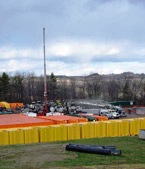
Is hydraulic fracturing the holy grail of energy independence or a groundwater nightmare in the making?
- By Keith Hall
- December 20, 2010
QGC, an Australian coal seam gas-explorer and -producer, has signed a contract with a consortium of GE and Laing O’Rourke for the construction of a water treatment plant in southwest Queensland that will support the region’s rapidly growing coal seam gas industry.
U.S. Environmental Protection Agency, the state of Ohio and the Ottawa River Group announced that they have completed a major cleanup project on the Ottawa River.
Fru-Con Construction has been awarded two contracts totaling $138.7 million to improve and expand the Patapsco Wastewater Treatment Plant for the city of Baltimore.
Potentially harmful arsenic levels have been found in private water wells in towns across Maine where elevated arsenic risks were not previously suspected.
Flammable and bubbling drinking water was coming out of taps at two residences near Fort Worth, Texas; EPA testing found methane and benzene.
The American Water Works Association's survey covers water and wastewater utilities of all sizes.

Study shows pollutant levels in soil collected from Mount Everest glacier were acceptable for most trace elements; arsenic and cadmium exceeded drinking water standards.
Following its initial screening list of 67 pesticide chemicals, the agency now turns it attention to chemicals found in solvents, gasoline, plastics, personal care products, other pesticides, and pharmaceuticals.
Puralytics' photochemical water purification process took top honors with 28 percent of the audience vote during Global Water Intelligence's first U.S. conference.
The demonstration facility will help the district evaluate environmental and energy recoveries.
Researchers Robert Jackson and Mark Little took core samples from four drinking water aquifers and discovered that some sites may be more conducive to carbon dioxide storage than others.
Nearly two-thirds of those surveyed say they’re willing to pay more now to ensure long-term access to clean water.
The 25-year plan advances potential future contingency resources, such as stormwater capture and seawater desalination.
The board is looking to repair a crack in the interior, erosion control lining of the C.W. Bill Young Regional Reservoir.