A new study by researchers at the Johns Hopkins Center for Injury Research and Policy finds that helicopters that service the drilling platforms and vessels in the Gulf of Mexico crash on average more than six times per year resulting in an average of five deaths per year.
The U.S. Environmental Protection Agency announced that a chemical distributor in Roanoke, Va., has agreed to pay a $43,967 penalty and complete more than $200,000 in safety improvements to settle alleged violations of federal environmental laws designed to protect and inform the public about hazardous chemicals.
Labor Day is coming, with the chance to get in one last weekend of watersports fun before fall and winter make the lake off-limits. Make sure you stay safe for next year's boat season with these tips.
With the expectation that Hurricane Irene, which is currently gathering steam offshore, will hit at least some part of the East Coast, here are a few tips that can help consumers prepare for—and ride out—a storm.
NEDAK Ethanol LLC, an alternative fuels manufacturer, has agreed to pay a civil penalty of $3,600 to the United States for failing to develop a risk management program and file a risk management plan for its ethanol production facility at Atkinson, Neb.
Green chemistry is the expansive discipline that is evolving in response to a wide array of challenges and, according to a new report from Pike Research, represents a market opportunity that will grow from $2.8 billion in 2011 to $98.5 billion by 2020.
The report details ways in which disaster risk managers can improve their decision making by integrating climate information into their operations.
Alleging that the company violated federal and state water laws, The United States, the California Department of Fish and Game and the California Regional Water Quality Control Board, Central Coast Region, filed a civil complaint in federal court against Greka Oil & Gas Inc. (now known as HVI Cat Canyon Inc.).
While biobased industrial performance chemicals have been around for awhile, manufacturers have made great strides in the past decade in improving their effectiveness.
Under the terms of the agreement, Kraft is also required to clean up the plant site and groundwater, and install mitigation systems in affected homes. The settlement was approved Friday afternoon by a U.S. District Court judge in Indianapolis.
The U.S. Environmental Protection Agency has made public the identities of more than 150 chemicals contained in 104 health and safety studies that industry had claimed confidential.
<p>The owner and manager of a California condominium complex were sentenced for conspiring to violate the Clean Air Act’s asbestos work practice standards during the renovation of a 204-unit apartment building in Winnetka, Calif., in 2006 – work that caused asbestos to be released into the complex and the surrounding community. </p><p>
Charles Yi, of Santa Clarita, Calif., was sentenced by U.S. District Judge Percy Anderson to four years in prison. John Bostick, also of Santa Clarita, was sentenced to six months home confinement, 150 hours of community service, and three years probation. Yi was convicted after a two-week trial in March 2011 when a jury found him guilty of five felony offenses, including conspiring to violate the Clean Air Act. Bostick pleaded guilty in February 2011 to conspiracy to violate the Clean Air Act. </p><p>
The jury also convicted Yi of failing to notify the Environmental Protection Agency and the South Coast Air Quality Management District about a renovation containing asbestos, failing to provide a properly trained person during a renovation containing asbestos, failing to properly remove asbestos and failing to properly dispose of asbestos wastes.
</p><p>
Yi was the owner of the now-defunct Millennium-Pacific Icon Group and Bostick was its vice-president. Millennium-Pacific owned the Forest Glen apartment complex in Winnetka that was being converted into condominiums in 2006. Knowing that asbestos was present in the ceilings of apartments in the Forest Glen complex, Yi, Bostick, and the project manager, Joseph Yoon, hired workers who were not trained or certified to conduct asbestos abatements. The workers scraped the ceilings of the apartments without knowing about the asbestos and without wearing any protective gear. The illegal scraping resulted in the repeated release of asbestos-containing material throughout the apartment complex and the surrounding area because Santa Ana winds were blowing during the time of the illegal work. After the illegal asbestos abatement was shut down by an inspector from the South Coast Air Quality Management District, the asbestos was cleaned up at a cost of approximately $1.2 million. Yoon pleaded guilty to conspiracy charges in June 2010 and is scheduled to be sentenced in July. </p><p>
The federal Clean Air Act requires those who own or supervise the renovation of buildings that contain asbestos to adhere to certain established work practice standards. These standards were created to ensure the safe removal and disposal of the asbestos and the protection of workers.
</p><p>
A University of Sheffield professor has found a way of locking up iodine radioisotopes in a durable, solid material suitable for ultimate disposal, such as lead iodovanadinite(Pb5(VO4)3I).
Vermont Gov. Peter Shumlin signed into law a bill that requires manufacturers of mercury-containing lamps to establish and finance a recycling program for spent bulbs from residents and small businesses.
Chesapeake Energy agreed to pay the penalty for using faulty well casings that allowed natural gas to seep into the water supply and for improper handling of a wet gas that resulted in a fire.
The agreement resolves the company’s National Pollution Discharge Elimination System permit violations and unpermitted discharges at the mines and mills that occurred from 2008 to 2010.
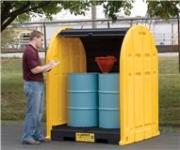
Ignoring EPA regulations can be costly -- and not just in terms of fines.
Central Valley Grocery gas station in Poulsbo, Wash., has agreed to pay $11,356 for failing to properly monitor three underground storage tanks (USTs) for leaks for more than a year.
Oregon Freeze Dry Inc. will pay the U.S. Environmental Protection Agency $3,323 for its failure to report an estimated 422 pounds of anhydrous ammonia released at its food freeze dryer facility in Albany, Ore.
The company failed to notify owners and occupants of at least eight Omaha residential properties built before 1978 of lead-based paint risks before performing renovation work at those locations.