
Companies should implement eco-friendly strategies, such as sustainable packing materials and proper disposal, to reduce environmental impact during large-scale moves.

Looking to get rid of an older vehicle but want to be environmentally-conscience? You have options.

How does medical waste affect the environment, and what role can technology play?

Some people in Iraq and Afghanistan who lived or worked downwind from burn pits experienced negative health effects.
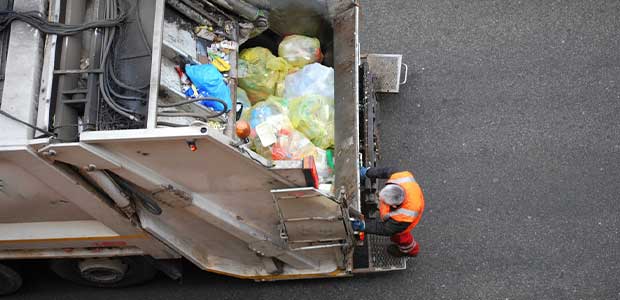
Although the amount of waste on our planet is estimated to increase, there are steps we can take now to change that.

The coronavirus pandemic has increased the need for PPE, which has the potential to become litter.

Making repairs, finding a reputable recycling company, donating older products and cutting down on purchases are just a few ways businesses can manage their e-waste problem.

The U.S. Environmental Protection Agency is proposing changes related to utility coal as sites such as eliminating the tonnage limit, merging onsite and offsite coal ash definitions and increasing transparency for utility groundwater filings.
A Nuclear Regulatory Commission Atomic Safety and Licensing Board will hear oral arguments on petitions for an adjudicatory hearing on Interim Storage Partners' license application for an interim facility to store spent nuclear fuel in Andrews County, Texas.
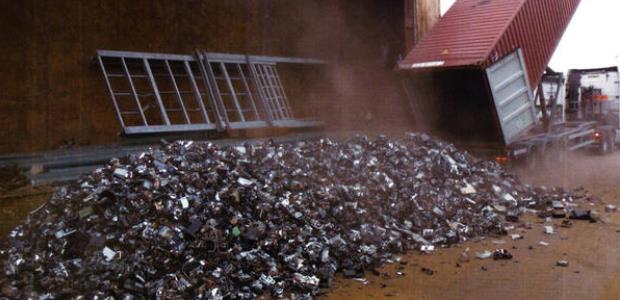
United Nations Deputy Secretary-General Amina Mohammed decried what she called the negative consequences of the current "take, make, and dispose" global economic model, citing harmful environmental and health impacts associated with the extraction of metals used in mobile phones, plastic waste flowing into the oceans, and the huge amount of electronic waste generated every year.
Elcon Recycling Services, LLC wants to construct and operate a hazardous waste treatment and storage facility to treat and store liquid waste at the Keystone Industrial Port Complex in Falls Township, Bucks County.
"Through their reckless mismanagement of waste explosives, the defendants put the safety of an entire town at risk," said Susan Bodine, assistant administrator of the EPA Office of Enforcement and Compliance Assurance. "Today's sentencing should send a clear message that EPA and our law enforcement partners will hold corporate officials responsible for violating laws designed to protect our communities and the environment."
The settlement requires Rho-Chem, LLC to complete a supplemental environmental project to purchase and provide at least $352,992 worth of emergency response instruments and communication and computing equipment to the Los Angeles County Fire Department's Homeland Security/Hazardous Materials Response Section.
The worker who died was making a turn while operating the truck from the right-hand side when he fell out and was run over. Cal/OSHA investigators determined the truck had a safety chain for the truck cab opening that could not be used because a part was missing.

While the e-Manifest is overall beneficial for the entire waste management industry, there is a lot to understand about the new system and other ever-changing regulations.
The toolkit includes safety guidance and material such as the "5 to Stay Alive" safety tips and "Top 10 Backing Best Practices." There is also a Safety Pledge for workers to sign and a Pledge to Get Home Safe mini poster.
Orleans Parish residents were able to bring paint, pesticides, antifreeze, garden chemicals, flammable liquids, muriatic acid, small mercury devices, aerosols, pool shock, household cleaners, motor oil, automobile batteries, and motorcycle batteries for disposal or recycling.

The eight-month test involved a waste transportation and storage cask fresh off the assembly line being loaded with three surrogate fuel rod assemblies from the United States, Spain, and South Korea and then traveling from Spain to Colorado and back again by truck, ship, and train.
The proposal comes from Holtec International, who is seeking an initial 40-year license for an underground storage facility that could accept and temporarily store used nuclear fuel accruing at reactors across the United States.
The Pennsylvania Department of Environmental Protection (DEP) has collected a $1.7 million civil penalty prescribed in a consent order and agreement with Energy Corporation of America (ECA) for violations at 17 well sites in Greene and Clearfield counties.