Agency to Require Progressive Stormwater Controls for Washington, D.C.
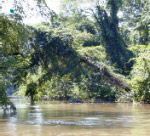
anacostia riverThe U.S. Environmental Protection Agency issued a proposed permit to the District of Columbia requiring the district to continue improving its Municipal Separate Storm Sewer System (MS4) program for controlling stormwater runoff. EPA is accepting comments on the permit until June 4.

“The innovations in this new permit are vital to restoring and protecting the health of local waterways in the district as well as the Chesapeake Bay,” said Shawn M. Garvin, EPA mid-Atlantic regional administrator. “We all need to do our part, and this permit can serve as a model to other municipalities for preventing runoff from washing harmful pollutants into streams and rivers in the Bay watershed.”

Medium and large MS4s such as the district’s are required by federal law to have permits covering their discharges. The permit announced on April 21 requires the district to take progressive steps that were not required by the old permit issued in 2004, including:

  • implementing a sustainable and enforceable approach to promoting low-impact development and green infrastructure (enhanced tree planting, green roofs, and water reuse onsite).
  • complying with strict discharge limits, and new performance standards requiring 90 percent on-site retention of storm flows at non-federal facilities for new development, redevelopment and retrofit projects, to avoid pollutant runoff and stream damage.
  • increasing monitoring of total maximum daily loading (TMDL) or “pollution diet,” for impaired waterways, including the Anacostia and Potomac rivers, Rock Creek and the Chesapeake Bay.
  • controlling and reducing trash through enhanced street sweeping and implementing the Anacostia River TMDL for a “Trash Free Potomac” by 2013.

The new permit conditions are necessary because large portions of impervious surfaces such as roads, rooftops and parking lots in the district channel stormwater directly into local streams and rivers. Improperly managed stormwater runoff from the district can damage streams, cause significant erosion, and carry excessive nitrogen phosphorus, sediment, toxic metals, volatile organic compounds, and other pollutants downstream and into the Chesapeake Bay.

Following the close of public review, EPA will prepare a response and make any necessary modifications to the permit to address public comment. EPA expects to finalize the permit within three months of the close of the public review.

Comments can be sent to Garrison Miller, U.S. EPA Region III (3WP41), Philadelphia, PA, 19103-5103; or Miller.Garrison@epa.gov.

Comments

Tue, May 4, 2010 Jerry San Diego

So the MS4 program can be sustainable, call out for information on all the newest technology,
and it will shower on you like rain.. right from the trade organizations.
SO many people are capitalizing on the “green movement”.
But, municipalities have methodically avoided product endorsement.. They never want to get caught going there, BUT acknowledging improvements in technology, has been left behind in the process ! When I saw the City of San Luis Obispo’s “Best Management Practices for hard-surface cleaning applications, I was elated ! They showed several ways of achieving Wash Water Control in surface cleaning applications WITHOUT endorsing any one product. They included images of several brands via methodology, NOT branding.
A month later, I saw the BMP’s had been erased from their website ! In fact, they no longer have ANY mention of ANY wash water control related ANYTHING. What an abortion of cooperation between an industry and its law-enforcement !
The cleaning industry has an enormous influence on the environment..
In fact, a growingly positive influence.
Pressure wash equipment uses water most effectively, and efficiently.. filtering the wash water for re-use is clearly recycling, filtering it at the point of use is WAY better than dilution “down-stream”. The entire industry addresses the fact that dilution is NOT the solution. The idiots of bad example are long-since out of business, or at least, easy to single-out.
Now, capitalism and technology, have embraced the Enviro-Friendly. The best of the new contracts are more profitable and sustainable.. Using less water, with faster cleaning tools, fast reclaim, simplistic Enviro-Friendly filtration, is extremely “popular” as everyone benefits with being Enviro-Friendly in their sales department, and breathes easier in the legal department.
Inversely, the “disconnection” between municipalities and the technology has actually become a “liability problem”. a municipality that enforces wash water control laws, but doesn’t have their own crews completely legal (to the SAME standards,) is magnetic to a class-action lawsuit. We are seeing this all over America. If the front steps of City Hall aren’t being cleaned enviro-friendly, if every fleet vehicle, parking lot, and fire-truck aren’t cleaned enviro-friendly the city can be sued. If the ambulance chasers are still leaving kitty-litter in the streets, it is illegal to levy a fine against anyone in that city. Every law must be enforced on a “level playing field”.
So, whilst they’ve been blinded by budget cuts, stormwater enforcement officers now need to acknowledge and embrace the new technologies, immediately.
One more thing.
MOST new technology comes from competitive small and medium-size business:
Don’t “dis-“ our new technologies anymore, and we’ll promise make sustainability possible.
Capitalism IS funding in every way, protection of the environment, and it always will.
Be proud and productive in it.

Add your Comment

Your Name:(optional)
Your Email:(optional)
Your Location:(optional)
Comment:
Please type the letters/numbers you see above