The Ohio EPA has initiated multiple studies to be conducted on the Lower Muskingum River tributaries and the Southwest Ohio River tributaries in order to monitor the water quality more closely.
Director Jim Watson also announced safety stand-downs will take place in each agency region this month, as part of National Safety Month.
American Conservation Experience has expanded its “Volunteer Vacations” program making experiences usually reserved for AmeriCorps service members or long-term volunteers accessible to more people.
River Network, the leading conservation organization for the river and watershed community in the United States, commemorates its 25th anniversary this year, and just wrapped up a successful 14th annual River Rally in St. Louis, Missouri.
Professional micro civil drones from Lehmann Aviation are now available with a touchscreen tablet running under Windows8 Operating System. The new innovative software helps to immediately process all flight data on a touchscreen tablet, laptop, or desktop PC.
The Pennsylvania DEP may be expanding the coastal zones for parts of Lake Erie across the state. The expansion will include all of the area watersheds that travel into the lake.
Scientists are monitoring and providing alerts on Pavlof and Cleveland, two of the most active volcanoes in Alaska.
"Even though these declines seem small on the surface, they are not," said USGS ecologist Michael Adams, the lead author of the study. "Small numbers build up to dramatic declines with time."
In a new study conducted by WHOI scientists, a “patient monitoring” device was attached to a whale that was entangled in fishing line. As a result of being tangled in the line, the whale’s ability to eat and migrate was directly affected, resulting in a slow death for the animal.
Court documents indicated Connie M. Knight required each attendee to pay between $150 and $300 cash to enter a class and at least 950 people were victims of her crimes in the Eastern District of Louisiana.
The National Fish and Wildlife Foundation (NFWF) has kicked off the Gulf Environmental Fund today, in which the foundation will execute $2.544 billion in plea agreements from the 2010 BP Deepwater Horizon oil spill in the Gulf of Mexico.
Resource Environmental Solutions (RES) have donated 2,500 cypress and oak trees to areas in Louisiana that have been devastated by hurricane and drought.
Camp Hill Borough, a historic town in Cumberland County Pennsylvania has been fined $140,000 by the Department of Environmental Protection for its unauthorized and unreported sewage discharges over the past two years.
The Woods Hole Oceanographic Institution (WHOI) is utilizing new robotic instruments to help monitor and manage harmful algal blooms (HABs) or red tides in New England. The first instrument has been in use since last month, and a second will be deployed later this spring.
The costs of disasters are not isolated to the cleanup. All disasters have lasting effects on the communities nearby.
Ben Nicholson and Kurt Koch created and designed Mudbuddy, a new iPad book that helps children learn about the environment.

Opponents argue the Obama administration's Planning Rule takes ecological sustainability too far, mostly because it puts ecological sustainability as the top priority for forest management plans.
- By Jack Tuholske, Molly Armus
- May 10, 2013
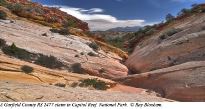
Unfortunately for many existing and proposed federal reserves in Utah and elsewhere, the legal threshold to establish an R.S. 2477 claim is minimal.
- By Hillary Hoffmann, Sara Imperiale
- May 09, 2013
Hydrologic researchers from the USGS found that nitrate from fertilizers takes decades to travel through groundwater and into streams, disturbing the water quality of streams and even large rivers for many more years to come.
The East Coast of the U.S. may soon be swarmed with billions of cicadas, outnumbering people from North Carolina to Connecticut by 600 to 1. But not to worry, even though the insects may be a nuisance, they’re not a threat to anything but a few shrubs.