
Why frac sand use will become more popular over the next few years and the best methods for drying frac sand.
- By Savannah Cooper
- December 03, 2013
A recent EPA report shows that blood mercury levels in women of childbearing age has decreased by 34 percent from a survey conducted in 1999-2000 to follow-up surveys conducted from 2001 to 2010. Additionally, the percentage of women of childbearing age with blood mercury levels above the level of concern decreased by 65 percent.
An unprecedented 10-year-study by the U.S. Fish and Wildlife Service shows encouraging results for frogs and toads on national wildlife refuges.
Scientist says a staggering amount of energy needed to punch through the ice.
Change our behaviors or expect significant economic and ecosystem loss to our world’s oceans.
The Lone Star State seeks environmental awareness.
Texas has a reputation for just about anything other than environmental activism, but a public hearing held Nov. 7 by EPA was crowded with people patiently waiting their three-minute turn at the microphone.
- By Antonia Gregory
- November 13, 2013
A new USGS study shows that nitrate levels are continuing to rise in the Mississippi River, including the outlet to the Gulf of Mexico.
Various news agencies are reporting starfish along the West Coast are dying in droves from a “wasting disease,” which turns the fish to “goo.”
Impatient oil companies associated with the project build rail terminals to deliver oil from western Canada to U.S. refineries in the Gulf Coast.
The average annual rate of forest loss has tripled since 2008, when the price of gold soared.
Local communities using tools like ropes and sticks produce forest carbon data on par with professional foresters
"The clear takeaway is that wildfires, smoke, and the conditions that increase fire risk are national health concerns that spread well beyond the borders of local fire perimeters, conditions that are only projected to worsen with climate change," a new NRDC report says.
GE helped Purdue University in West Lafayette, Ind., enhance the safety of its campus community by reducing the use of acid and caustic chemicals in the university’s utility plant.
The esoteric oarfish made its presence public on two separate occasions, at two separate Southern California beaches and in less than one week. The first, an 18-foot body, was found dead October 13, 2013 floating near Tayon Bay on California’s Catalina Island. The second, a 14-footer, was found washed ashore October 18 on an Oceanside beach. The distance between the two California beaches is approximately 50 nautical miles.
A researcher from Texas A&M University has simplified the task of counting shellfish by creating a cellphone app that uses GPS, making tracking over-harvested populations of the species simpler than ever. The app may one day help scientists track other marine life.

Why drilling mud is an essential component of the drilling process.
- By Savannah Cooper
- October 04, 2013
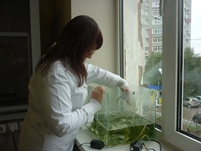
The Samara State Technical University research involves water phytoremediation with the use of Myriophyllum Verticillatum.
- By Alina Kopnina, Olga Zavodskaya
- October 04, 2013
The rufa red knot, a shorebird the size of a robin, has been listed as a threatened species under the Endangered Species Act. The U.S. Fish and Wildlife Service made the announcement on Friday, September 27.
Recent IPCC report sites human influence cause of global warming